

Lyrion
A luxury zodiac-inspired apparel and ritual homeware brand, built as a full commerce ecosystem rather than a storefront: four print-on-demand providers orchestrated behind one checkout, editorial content as the acquisition engine, and a birth-data personalization tool ahead of every product page.
01 / The problem

lyrion.co.uk
The UK luxury spiritual and lifestyle market is saturated, which means differentiation has to come from brand, not from another product grid. But brand alone doesn't ship orders. The category has a second, less glamorous problem: most sellers here run print-on-demand through a single provider, and a single provider is a single point of failure, one API outage or one bad batch and every order behind it stalls. Add UK and EU data regulation, inventory that has to stay synchronized across whichever external partner actually produces the item, and the constant tension between celestial storytelling and an actual "add to bag" button, and most small operators in this space end up choosing between looking premium and running reliably. Rarely both.
02 / The thinking
The brief I set for myself: a self-sustaining direct-to-consumer system that could scale internationally with minimal operational overhead, where brand authority and technical infrastructure work together instead of one propping up the other's weakness. I rejected a simple "shop by star sign" filter bolted onto a normal catalogue, since that treats the zodiac as a label rather than the actual reason someone would buy. I built The Oracle instead, an interactive birth-data reading that engages someone before any product is pushed at them, so personalization comes first and the product recommendation follows from it.
On the operations side, I rejected depending on one print-on-demand partner and integrated four: Printful, Gelato, Printify, and Inkthreadable, each with different strengths in geography, cost, and catalogue depth. I built automated routing logic that picks the right provider per order based on where it's shipping and what it is, with a fallback path if a provider errors out, rather than letting a single vendor's downtime become the brand's downtime.
I also treated content as the acquisition channel rather than a supporting blog. The Oracle and The Codex, an editorial arm of celestial insight and style guidance, exist specifically to build organic search authority and session time without depending on paid ad spend to bring people in.
The infrastructure behind the storefront
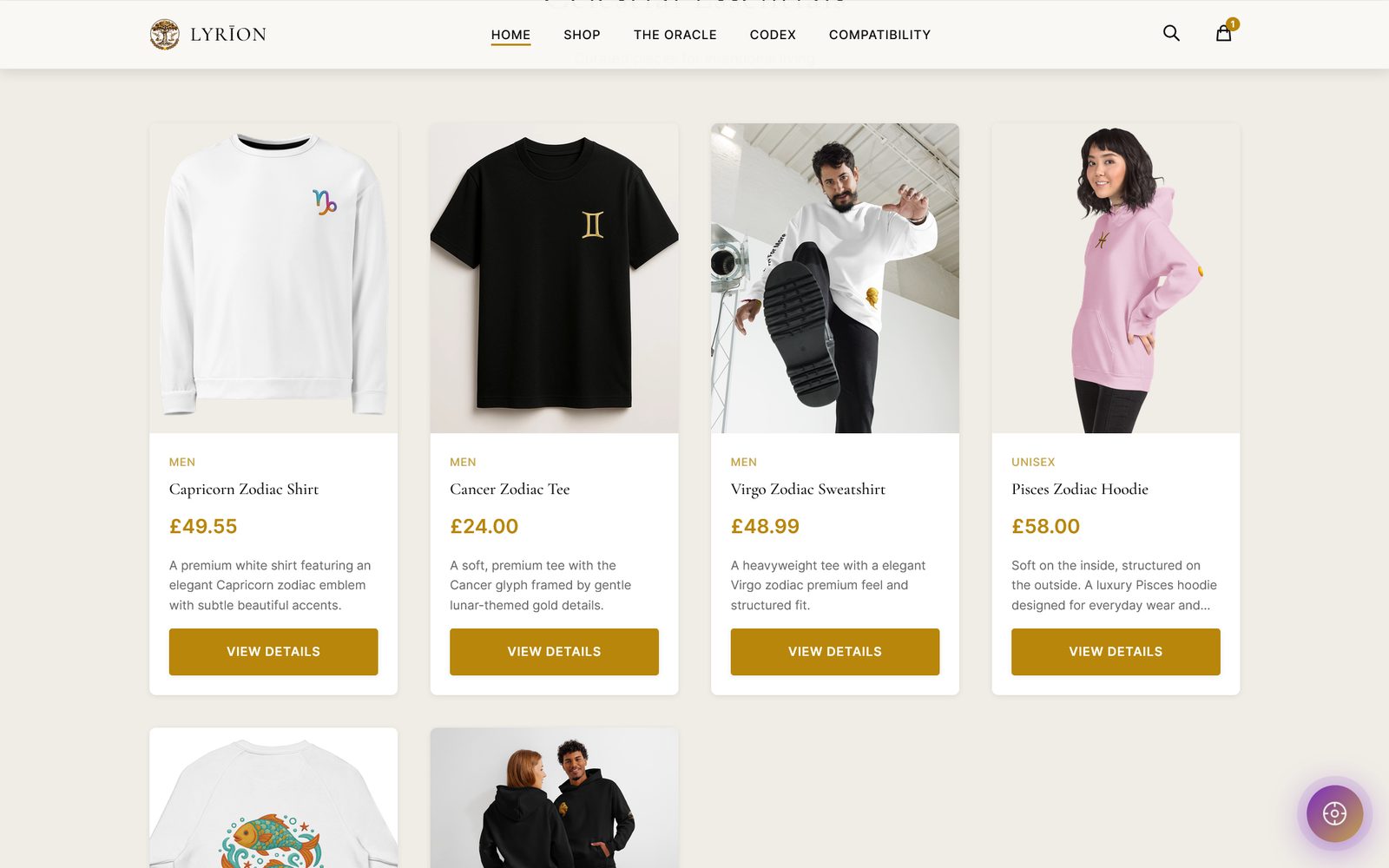
lyrion.co.uk/shop
Multi-provider fulfilment
Printful, Gelato, Printify, and Inkthreadable, with automated routing by geography, cost, and product type, and a fallback if one errors.
Serverless backend
Cloudflare Workers handle order processing and an API orchestration layer across all four providers, with Stripe triggering fulfilment automatically.
Catalog automation
CSV to JSON conversion means new SKUs go live without a code change, which matters at 100+ products.
The Oracle
An interactive birth-data reading that returns a cosmic signature before any product is suggested, functioning as both content and a conversion tool.
The Codex
Editorial celestial insight and style guides, SEO-built to establish authority in a crowded, cynical-about-mysticism market.
Static frontend
Plain HTML, CSS, and JS hosted on Netlify, chosen for load speed on a site where 65 percent of traffic is mobile.
03 / The business and the users
The buyer here is shopping on identity and ritual as much as on garment quality, which is why product copy frames a piece like the Lunar Robe as a ritual object rather than a plain description of fabric and fit. That same buyer is unusually cynical about performative spirituality, so every celestial reference in the brand voice had to earn its place rather than lean on aesthetic mysticism with nothing behind it.
Revenue isn't limited to direct sales: the architecture was built to support B2B wholesale to boutiques, affiliate and influencer partnerships, and a future membership or subscription layer for exclusive content and early access, none of which require rebuilding the commerce core to add.
04 / The constraints and what I learned
A static frontend paired with a serverless backend gets enterprise-level performance at startup-level infrastructure cost, but it means every integration point (Stripe, four fulfilment APIs) needs its own error handling and fallback, because the moment an order fails due to one dependency being down is the moment a customer is gone for good in a category built on trust.
The single clearest lesson from this build: infrastructure is brand in commerce. The most beautifully designed storefront fails instantly the first time an order doesn't arrive, and no amount of celestial copywriting recovers that. Customers who engaged with The Oracle converted at a noticeably higher rate than those who didn't, which told me plainly that they weren't buying apparel first, they were buying into a worldview first and the apparel followed.
05 / The outcome
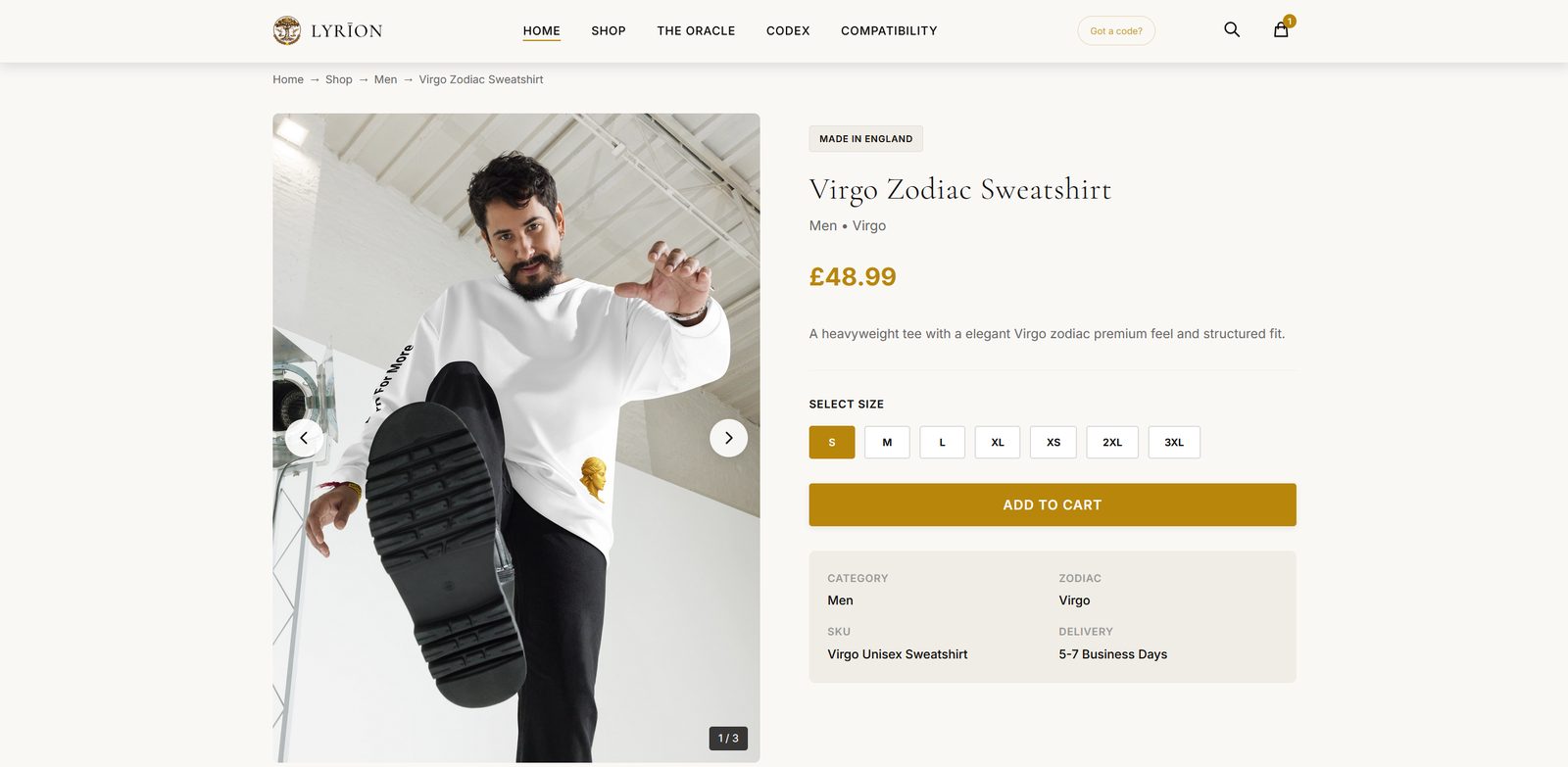
lyrion.co.uk/product
Live and operational, taking orders across multiple currencies with automated fulfilment routing running in production. The system was engineered as infrastructure from the start rather than decorated afterward as a storefront, which is the only reason it holds up at the order volume it's now handling.
4fulfilment providers orchestrated
65%of traffic is mobile
3xmore likely to purchase after using The Oracle
100+SKUs supported by the catalog system